Equipment guide
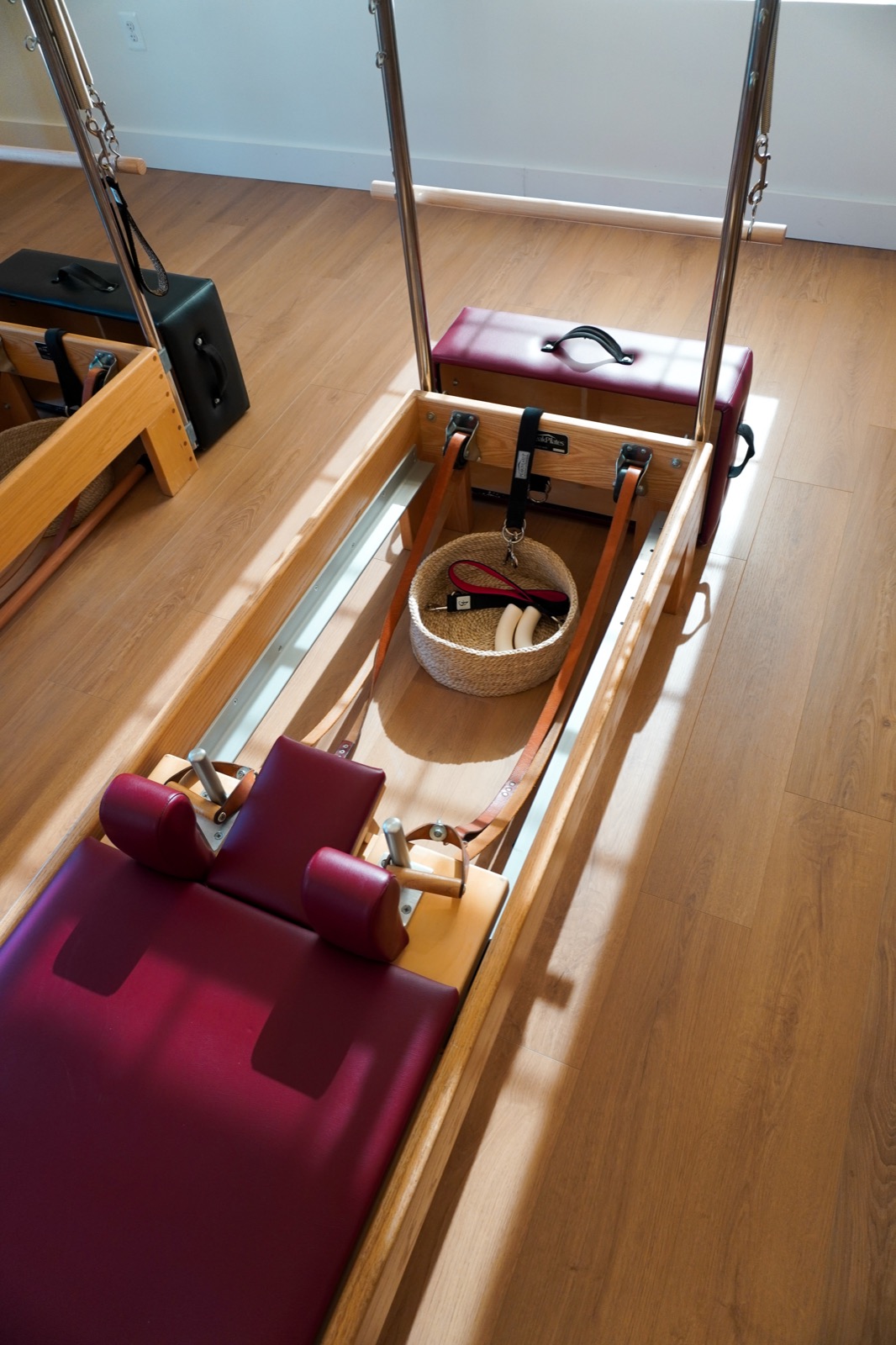
Meet the equipment
A visual guide to the reformer, tower, chair, and barrel, with examples from the fully equipped Great Falls Pilates studio.
Explore the guide
Understand the practice
A reformer is one part of the story. Discover the principles and apparatus behind the work we teach.
A clear answer
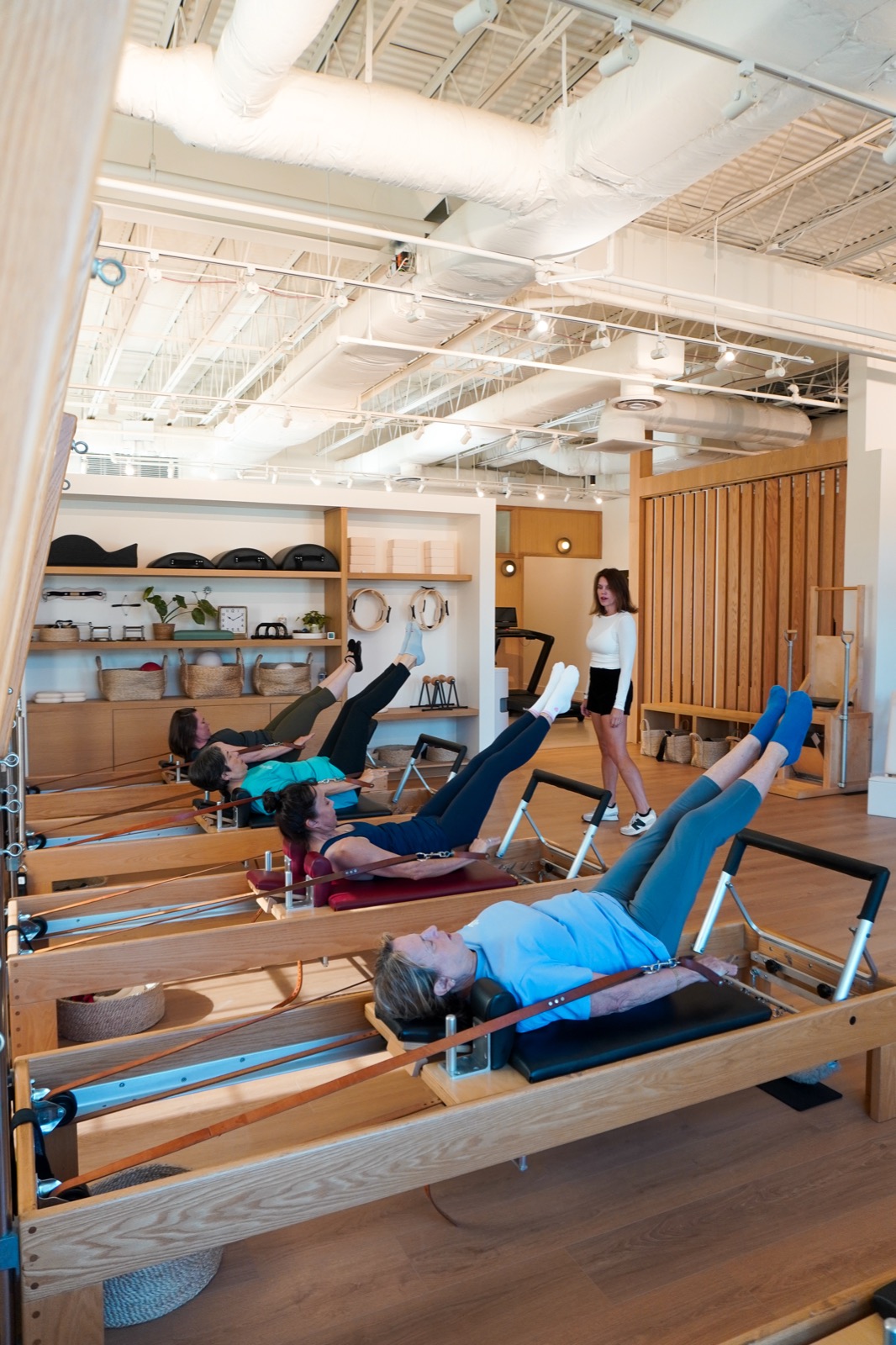
Classical-inspired Pilates draws on Joseph Pilates’ original movement system and equipment repertoire. At Great Falls Pilates, that means attention to control, breath, alignment, and progression, using more than the reformer and adapting instruction to the person in the session.
Pilates combines deliberate movement with attention to how the body works as a whole. Rather than treating each exercise as an isolated repetition, your instructor considers setup, coordination, and how one movement prepares you for another.
You may work with the resistance of springs, your own body weight, or support from the apparatus. Support does not necessarily make an exercise easy; it can help you find a movement more clearly. Resistance can provide feedback as well as challenge.
Our classical-inspired approach keeps the full system in view. A session may draw on different apparatus and progressions depending on its format and the person practicing.
Control is the ability to move with intention. Breath helps establish a rhythm. Alignment and precision bring attention to where movement begins and how it is organized. These ideas become practical cues rather than a list to memorize.
Your instructor may change a starting position, simplify a movement, or ask you to slow down. Those small adjustments help you understand the exercise. Progress can mean doing a familiar movement with greater control—not only moving to a harder exercise.
The aim is to develop a practice that can evolve with you. Questions and feedback are part of that process.
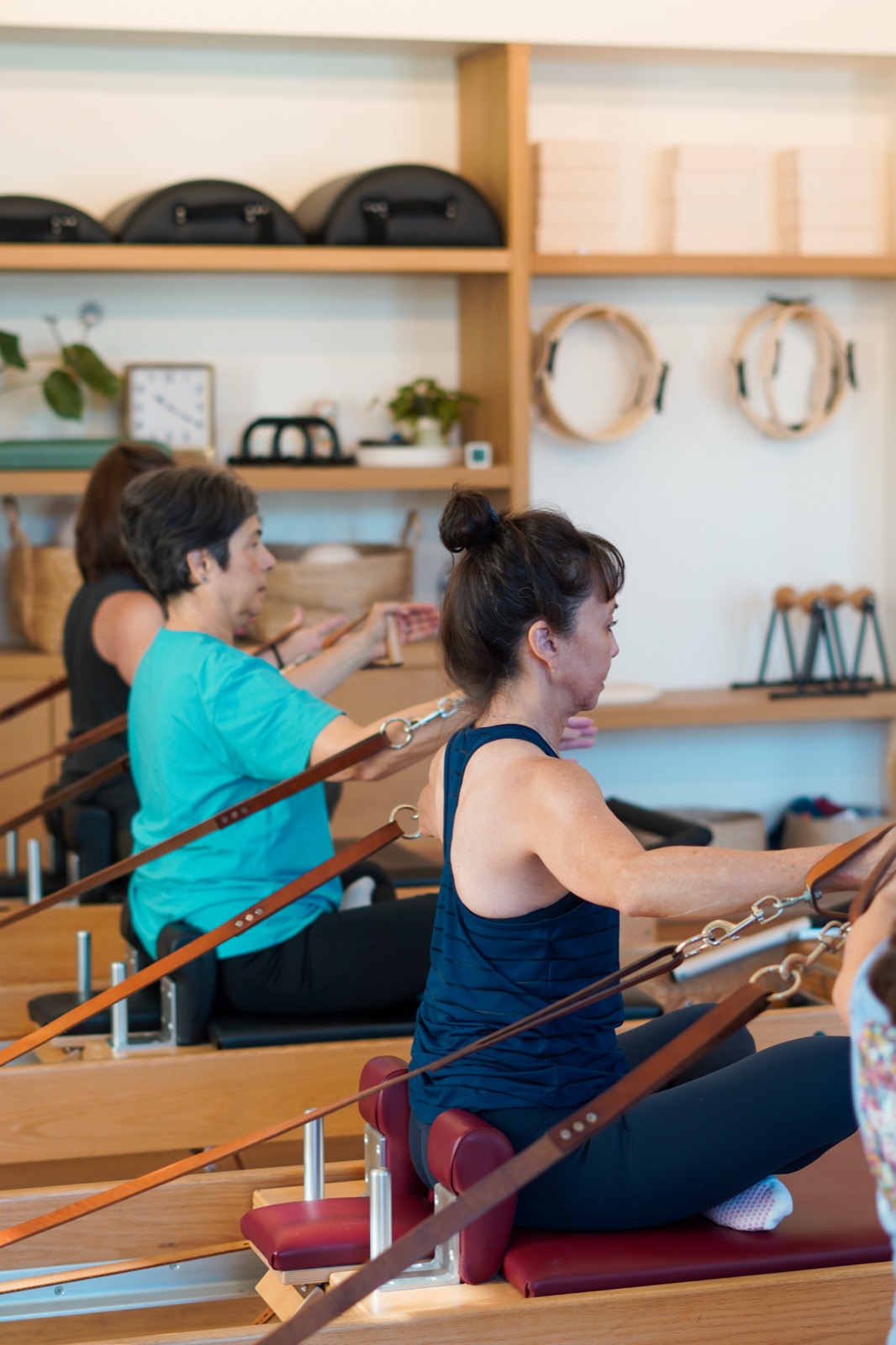
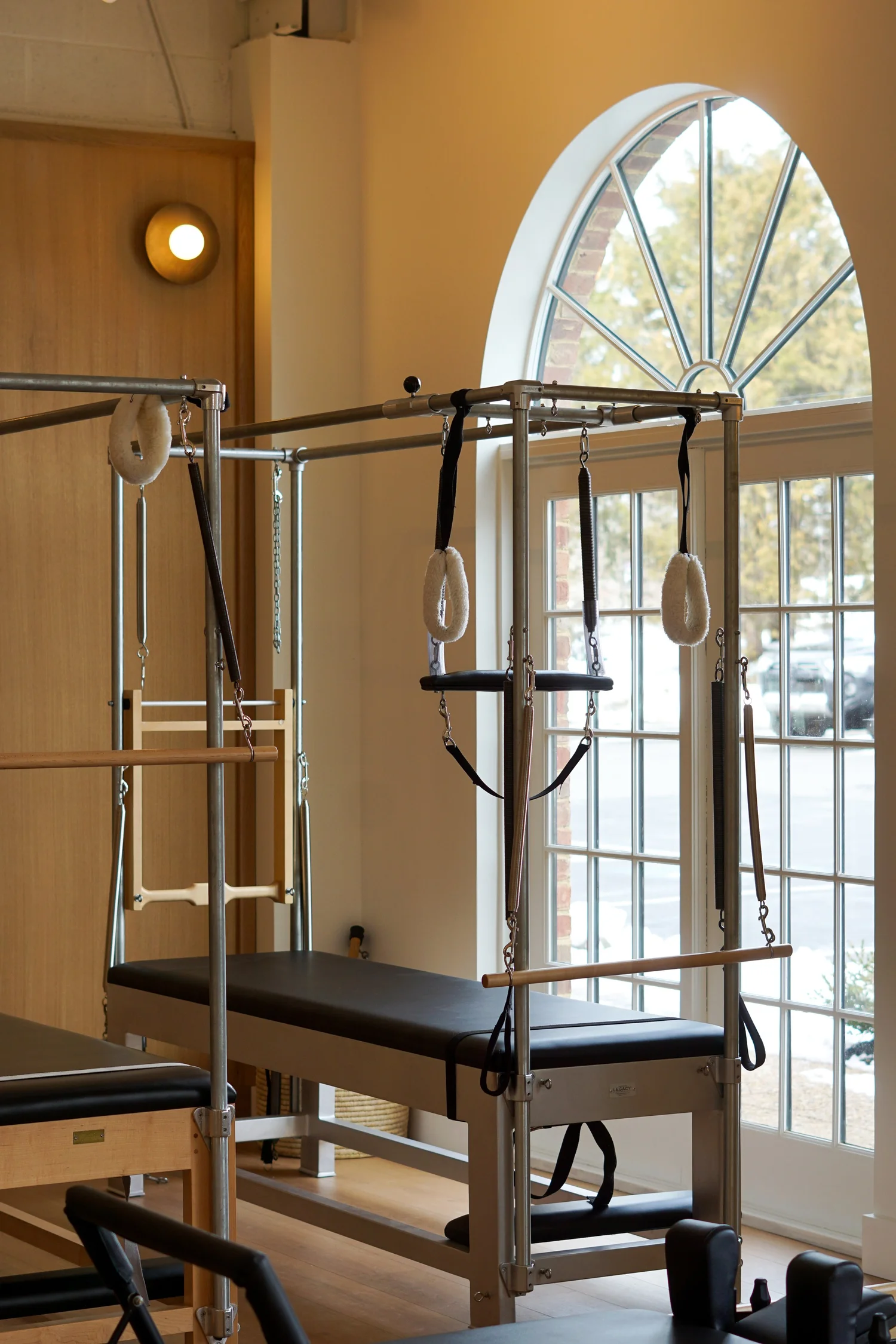
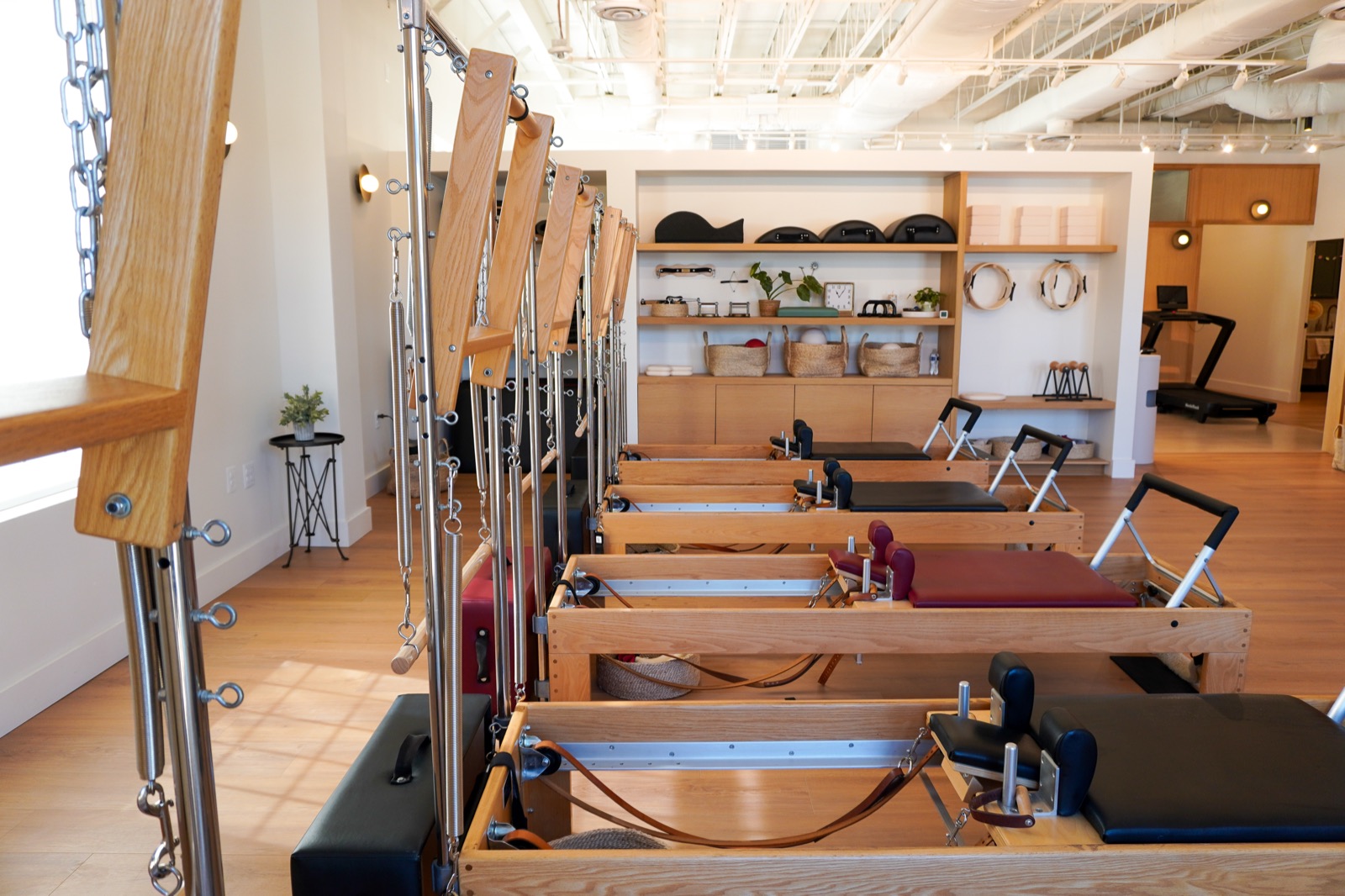
The reformer uses a moving carriage and springs. The tower combines a stable mat surface with bars and springs. Chair work adds seated and standing challenges, while barrels offer shaped surfaces for positioning and support.
Learning across the system gives you different ways to explore similar principles. Our equipment guide explains what you are looking at before you arrive, and the class guide helps you choose a session.
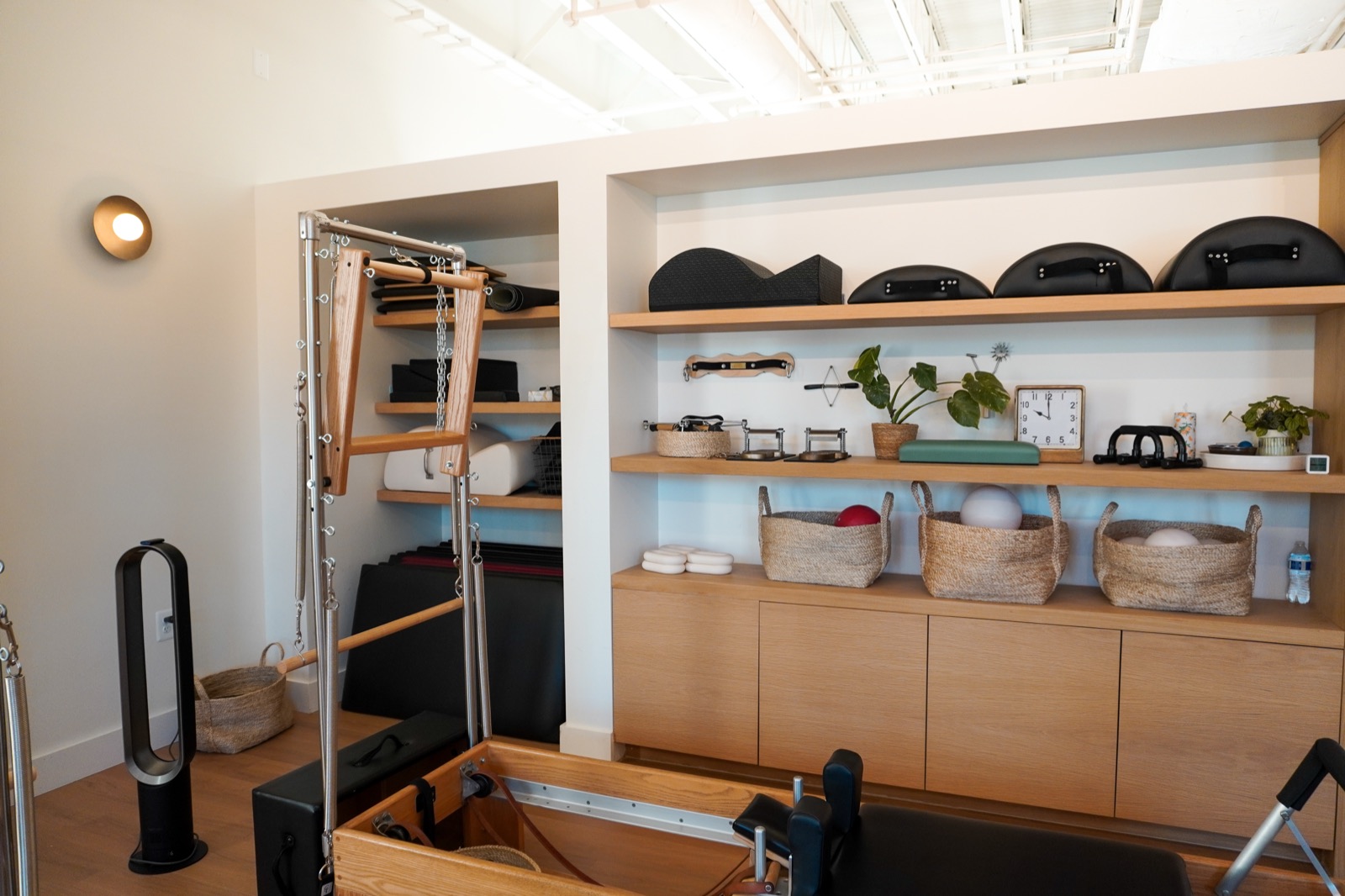
A look inside
Spring resistance, classical apparatus, and a bright local studio. Here is where the practice comes together.
No. Although the trunk is central to many Pilates movements, the method involves the whole body, including the hips, shoulders, legs, and arms.
No. Studios vary in teaching approach, equipment, class size, and session format. Great Falls Pilates describes its approach as classical-inspired and teaches a full equipment repertoire.
Pilates instruction and physical therapy serve different purposes. If you need diagnosis, treatment, or rehabilitation, speak with a licensed healthcare professional about the appropriate care.
Related reading
Explore the details, get your questions answered, and find the next step that fits you.
Equipment guide
A visual guide to the reformer, tower, chair, and barrel, with examples from the fully equipped Great Falls Pilates studio.
Explore the guide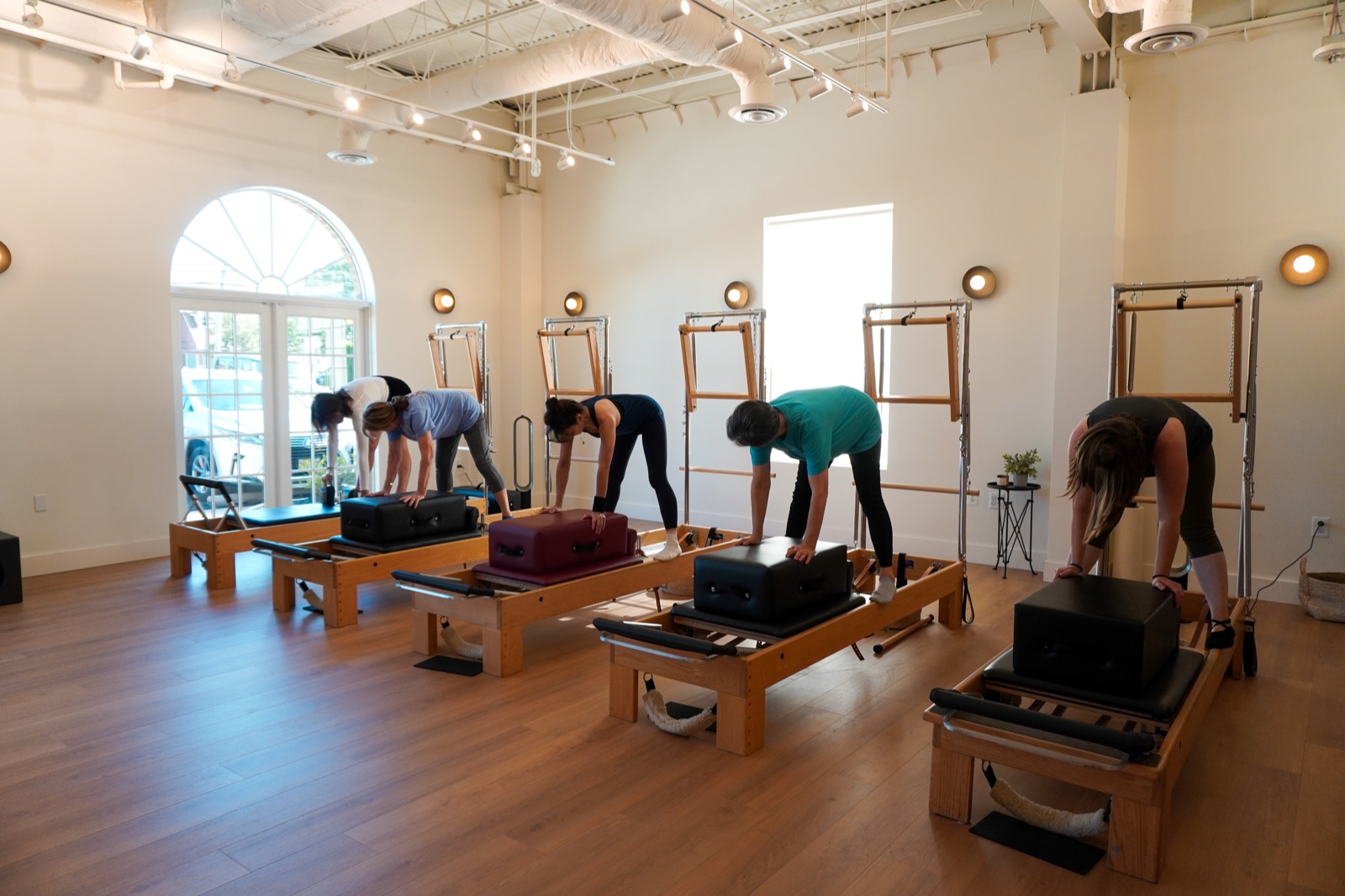
Small-group practice
Explore Pilates Reformer, Advanced Classical Reformer, Senior Reformer or Tower, Tower, and Chair class formats at Great Falls Pilates.
Explore the detailsNew to the studio
New to Pilates? Learn how to choose your first session, prepare for the studio, understand the equipment, and find a practice that fits your goals.
Explore the detailsA practice that starts with you
New to Pilates, returning to movement, or ready for a different kind of attention? Let’s find your next step.